West Side Story Auditions Need Rhythm, Range, and Story
By Broadwaytrax Content Studio · March 16, 2026
Updated June 3, 2026
The whistle hits. Your shoulders rise. Your feet want to move. West Side Story mixes love and danger through its music. Most calls want two quick, contrasting cuts. One should show a clear lyric line. The other should show rhythm and control. Pick songs that fit the show’s world and the role you want.
Understand Each Role. Start with what each character needs. Tony is a lyric tenor. He needs to float long lines, make wide leaps, and keep pitch center on the famous tritone in “Maria.” He also needs energy and clear rhythm in “Something’s Coming.” Maria is a legit soprano who should have a pure head voice and bright text. Anita should showcase bite as a mezzo/alto, transitioning from sharp speech to warm legato in “A Boy Like That/I Have a Love.” Riff is a baritenor known for crisp consonants and strong rhythm. Bernardo, a baritone, is often judged first on presence and movement, then on rhythm when singing (Music Theatre International (MTI)).
Shape Your Cuts. For Tony, start “Maria” at “The most beautiful sound I ever heard…” and end after the title phrase. Keep vowels tall and release the last note clean. You can also use “Something’s Coming” from “Could be…” to “Something’s comin’, don’t know when.” For Maria, start “Only you, you’re the only thing I’ll see forever…” in the Balcony Scene, then move into the first “Tonight.” Aim for a delicate head voice and clear words. You can show brightness with “I Feel Pretty,” starting at “I feel charming…”
For Anita, you can show power and story with “A Boy Like That,” ending at “Stick to your own kind.” If you want to show more range and heart, split the cut into “I have a love.” For Riff, start “Cool” at “Boy, boy, crazy boy…” through a full chorus and a brief break. Breathing on rests is essential. Make sure your S’s and T’s are clear. Ensemble singers can take a 45- to 60-second medley from the “Cool” chorus and a “Tonight Quintet” line, finishing with a clean, unified end.
Embrace the Style. Bernstein’s writing feels like a dance—a blend of meter changes. In “America,” practice clapping big beats with a metronome while singing the subdivided notes. Your body keeps the rhythm while your voice plays. For “Cool,” make sure every cue is perfectly timed. Remember, the tritone in “Maria” is like a character—focus first on the vowel and then add color without spreading on high notes (Leonard Bernstein Office).
Work on Your Text. Sondheim’s lyrics require clear articulation. Make sure consonants land without breaking the flow. If directed to include Spanish or other language shifts, keep clarity and respect in mind. Use light taps for the R’s and maintain vowel clarity according to the script you are given (MTI).
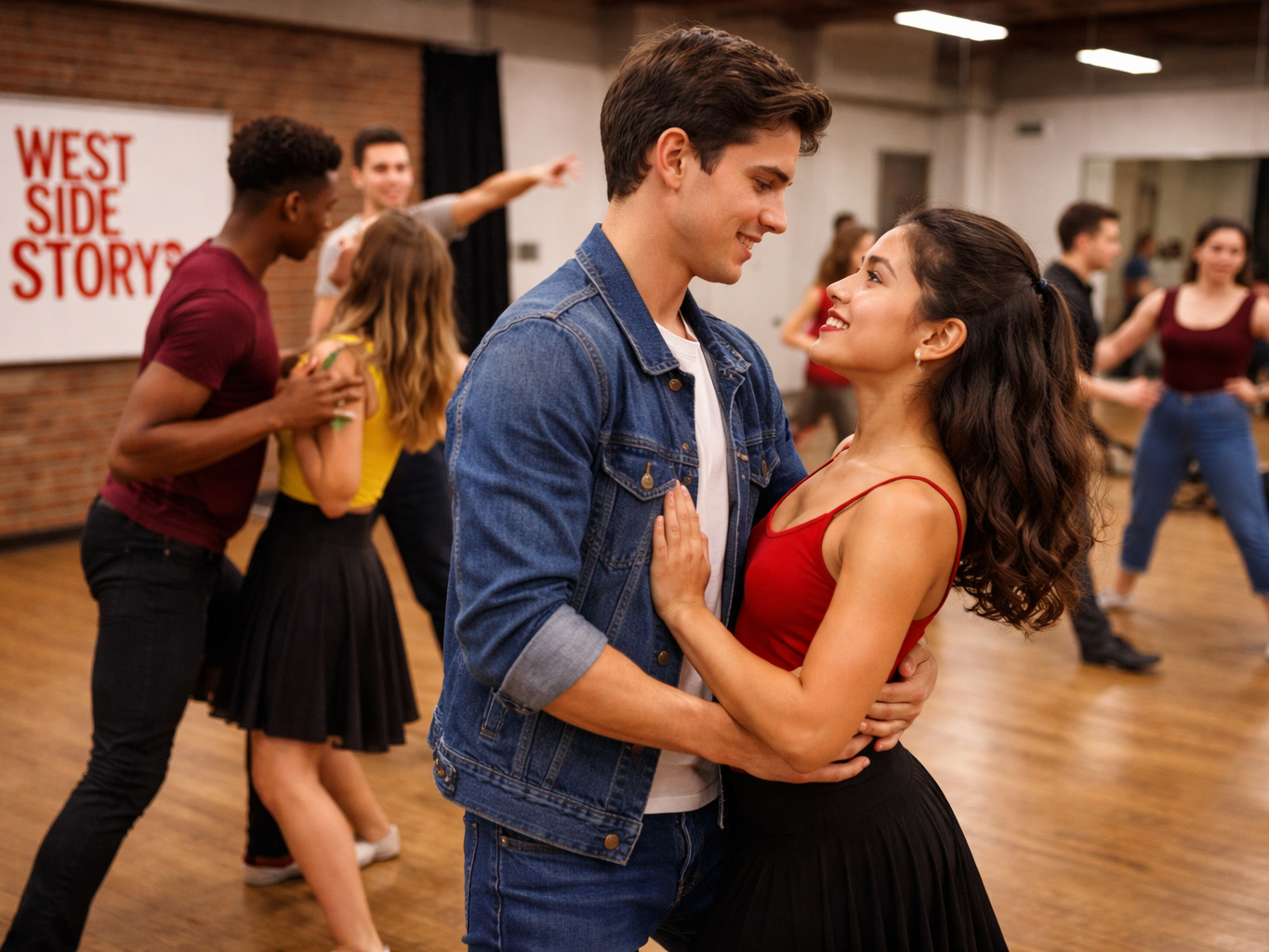
Be Ready to Move. The dance style combines ballet with Latin social dance. Think of mambo, cha-cha, and quick snaps on offbeats. Train with a cha-cha to a click, adding snaps on the “and” beats. Practice stopping abruptly after spins. Wear flexible shoes that allow you to freeze in place. In the audition room, angle your snaps away from the panel and ensure your sound doesn’t disrupt the mic when taping.
Focus Your Mind. The emotional shifts are quick. Before you start, remind yourself of your objective. Take a deeper breath by inhaling for 4, holding for 2, and exhaling for 8. Feel your body relax. On your count-in, let your eyes connect with the moment. If redirected, change your verb without changing your volume; this small adjustment shows professionalism.
Self-Taping Tips. When recording “America”-like pieces, practice swinging at a dotted-quarter tempo. For “Cool,” count the rests out loud during rehearsals but remain silent when recording. This will help you hold the correct rhythm.
Watch for Common Mistakes. Avoid pushing your volume on legit songs to show power. Choose breath and control over loudness. Similarly, don’t rush when singing mixed meters. Practice clapping the main beats before adding the words. Make sure to adjust the mic angle when snapping or clapping, as these can clutter your sound.
Download West Side Story and start prepping for your next audition.
Download West Side Story Backing TracksYour Week Before the Audition. Lock in your tempos and keys. Mark breaths in phrases. Rehearse a simple mambo phrase to match your cut's tempo and end with a freeze. Prepare one contrasting song with a similar feel in case they ask for changes. For practice cues, check our In the Heights album at (https://broadwaytrax.com/album/2186/in-the-heights-accompaniment-album). You can also reference our cut guide at (https://broadwaytrax.com/spotlight/how-to-choose-the-perfect-audition-cut-for-musical-theatre) and check our plans for using musical theater tracks at (https://broadwaytrax.com/spotlight/how-to-practice-musical-theatre-songs-with-backing-tracks).
Every choice should reflect the character you want to portray in West Side Story. Remember, its revival styles have shifted, so read the notice carefully and adapt accordingly. Bring both love and intensity into the room; that balance will book you the role (Internet Broadway Database (IBDB)).