Make “A New Life” Sound Like a Decision, Not a Wish
By Broadwaytrax Content Studio · November 19, 2026
Updated November 19, 2026
The short answer: rehearse “A New Life” as a decision being made in real time, not as a wish the performer has already settled. The number becomes stronger when each section changes what the singer is willing to do, the accompaniment supplies dependable forward motion, and the final phrase completes a choice rather than merely displaying a voice.
That distinction matters in rehearsal. A performer can sing every note accurately and still leave the scene emotionally parked. The useful question is not “How hopeful should this sound?” It is “What becomes possible here that was not possible at the start?”
Bring "Make “A New Life” Sound Like a Decision, Not a Wish" to life with custom tracks
Get the exact arrangement you need—either customize an existing accompaniment or commission a bespoke build from our team.
Don't see this show in our library yet? We'll build it for you.Begin with a choice, not a mood
Before singing, ask the performer to complete one sentence:
By the end of this song, I am choosing to ______.
Keep the answer active and specific. “Feel hopeful” is a mood. “Leave,” “begin again,” “stop accepting this,” or “claim a different future” gives the performer something playable.
Then add the obstacle:
I have not made that choice yet because ______.
The obstacle keeps the opening alive. If the performer begins fully certain, the rest of the number can only get louder. If uncertainty, cost, fear, or attachment remains present, every musical section has somewhere to go.
Speak the text once as a private conversation. Do not perform the ending early. Let the decision emerge from the sequence of thoughts.
Map the song by changes of mind
Divide the number by dramatic turns rather than vocal difficulty. For each section, write a short action in the margin.
A practical map might move through:
- admitting what can no longer continue,
- imagining a different possibility,
- testing whether that possibility is real,
- accepting what the choice will cost,
- deciding to move forward.
The exact labels should fit the production’s scene work. What matters is that the singer has a new job whenever the musical idea changes.
Run the map at speaking volume. Ask the performer to pause after each section and state what is now different. If the answer is “nothing,” sharpen the action before adding vocal intensity.
Let the accompaniment create forward motion
Broadwaytrax currently lists “A New Life” as an accompaniment track from Jekyll and Hyde. The full album also places it as track 17 in an 18-track sequence. That makes the accompaniment useful for more than pitch practice: it supplies a fixed path through the scene and a dependable approach to the show’s closing stretch.
Listen once without singing and mark a few shared landmarks:
- the first entrance,
- the end of the opening thought,
- the first clear change in musical texture,
- the point where the possibility becomes a plan,
- the final approach,
- the release after the last phrase.
Give each landmark a dramatic label as well as a musical one. “She stops negotiating with the past” is more useful than a measure number by itself.
Then speak the scene over the track. Stay connected to the pulse without turning the words into mechanical rhythm. The accompaniment should keep the decision moving while the performer remains free to think.
Build independence in short passes
An accompaniment-only rehearsal asks the performer to carry the vocal line and the scene without leaning on a demonstration singer. Build that independence in manageable sections.
Use this sequence:
- listen to one section while following the approved score,
- name the accompaniment cue before the entrance,
- speak the thought over the track,
- sing the section at a comfortable rehearsal volume,
- connect it to the next section without stopping,
- run the complete number and note only the places where the decision becomes unclear.
Fix one musical issue and one dramatic issue at a time. Too many simultaneous notes can make a performer cautious, especially in a number that needs growing resolve.
If an entrance is unreliable, identify the sound that precedes it. If a phrase loses energy, check the thought before asking for more volume. If the ending feels disconnected, rehearse the decision immediately before it.
Give every breath a dramatic job
Breath planning should support the changing argument.
Mark breaths according to what they do:
- a breath that admits a difficult truth,
- a breath that considers a possibility,
- a breath that steadies the performer,
- a breath that commits to the next thought,
- a breath that allows the final decision to land.
Test the text from the back of the room. Consonants should clarify the thought without making the line heavy. Sustained vowels need support without losing the word that launched them.
Record one pass and listen without watching. Can you hear when the performer imagines, resists, risks, and decides? If the only change is volume, return to the section map.
Keep the body available to change
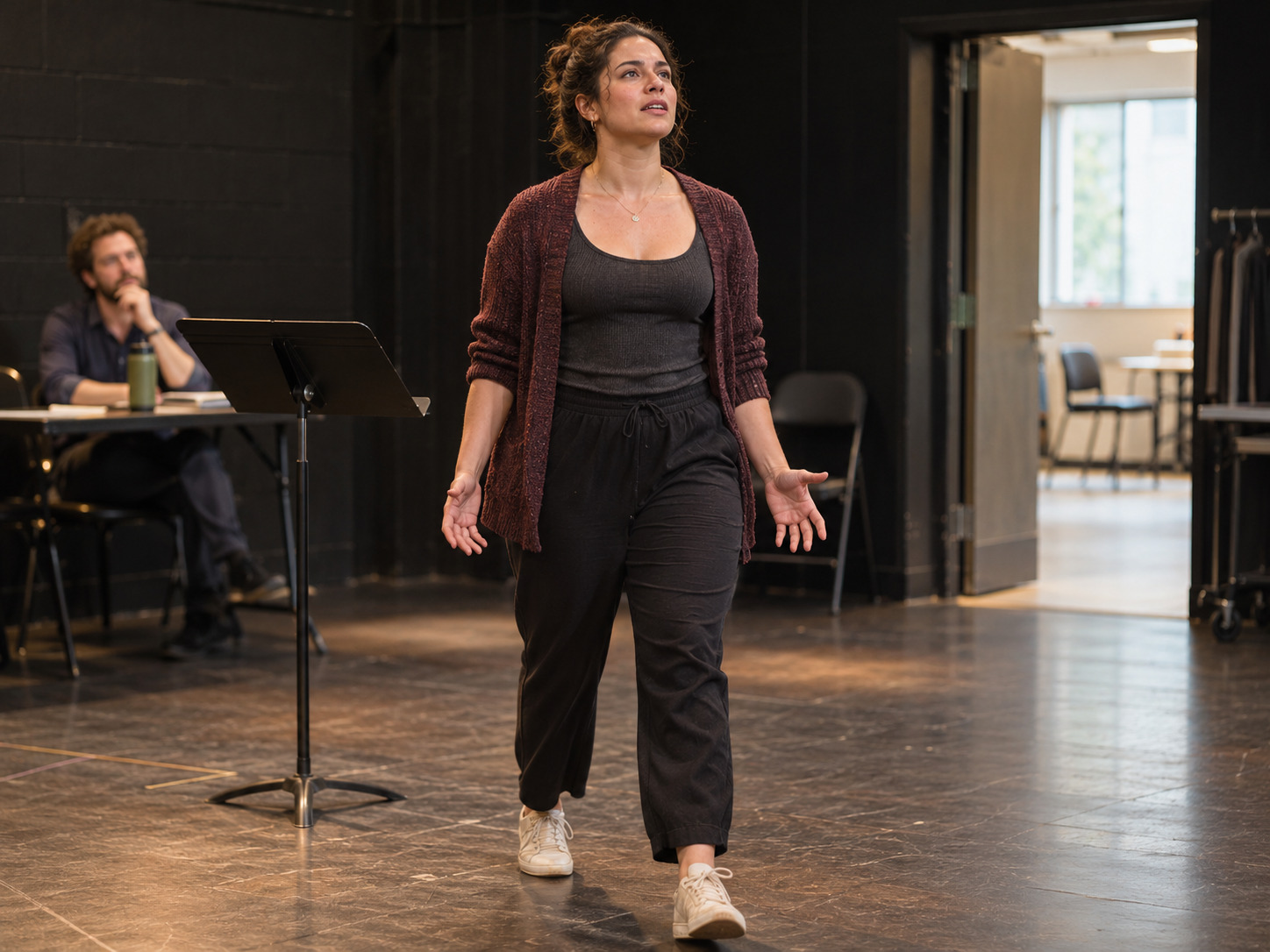
A song about a new direction can tempt a performer into large, symbolic movement. Start smaller.
Choose one real focus in the room. Run the opening with the hands relaxed and no planned gestures. Let posture, focus, and distance change only when the thought changes.
Then add back movement that has a clear purpose:
- moving closer to the person who needs to understand,
- turning away from something the performer is leaving,
- crossing because a decision has become physical,
- becoming still when the choice finally settles.
Avoid illustrating every image. One purposeful change in position can reveal more than a sequence of gestures.
Do not arrive resolved too soon
The title can make the destination feel obvious. The scene is more interesting when the performer still has to earn it.
Try three rehearsal versions:
- one in which the possibility feels almost impossible,
- one in which the performer is eager but frightened,
- one in which the performer resists until the final section.
Compare the versions against the score and the production’s scene work. Keep the one that creates the clearest journey without contradicting the surrounding scene.
The strongest version usually preserves some cost. A new direction matters because something real must be released, risked, or accepted.
Test the exact cut and ending
If the song is being prepared for an audition, recital, showcase, or approved production use, rehearse the exact file and cut that will be played.
The cut should contain:
- a clear starting circumstance,
- at least one change of thought,
- enough musical context for the entrance,
- a recognizable decision,
- an ending the room can read.
Practice the lead-in before the track begins. Decide who starts playback, what the performer is doing during the introduction, and what sound cues the first entrance.
Continue after the final note. The performer should finish the scene, receive the silence, and remain connected long enough for the room to understand what changed.
Know when the standard track needs a real change
Many rehearsal problems belong to cue ownership, thought clarity, breath planning, or staging. Some belong to the file.
Document the exact mismatch when:
- the approved key does not fit the performer reliably,
- an approved cut removes the dramatic turn,
- the introduction does not support the planned entrance,
- the tempo prevents the agreed scene work,
- the ending needs a different performance button,
- or the production needs a specific lead-in or cue.
Name the current file, exact section, musical landmark, stage action, and desired result. A concrete request is easier to evaluate than “make it more dramatic” or “give us more time.”
Any edit to protected show material should be confirmed with the appropriate rights holder. A custom recording or sound-recording license does not replace permission to perform or alter the musical.
FAQ: rehearsing “A New Life”
Should the performer begin with full confidence?
Usually not. Preserve an obstacle at the opening so the performer can discover, test, and finally commit to the new direction. Let confidence grow from the decisions in the scene.
How do I stop the number from becoming one long build?
Give each section a different action and keep the dynamic change connected to a change of thought. Volume can support the journey, but it should not substitute for it.
Can the Broadwaytrax recording be used in a public production?
The current product page distinguishes personal practice or recital use from theater use. It also states that a theater license covers use of the sound recording, while grand rights from the publisher are required for theatrical performances. Confirm the applicable permissions for the exact production.
What if the track does not fit the singer or staging?
First identify whether the issue is the key, cut, tempo, lead-in, cue, ending, or a rehearsal choice. Broadwaytrax’s current product and album pages provide a customization route for production needs. Describe the mismatch precisely before requesting a change.
Ready to turn the song’s changing thoughts into one complete decision? Rehearse with the Broadwaytrax accompaniment track for “A New Life.”
Rehearse “A New Life”The takeaway
“A New Life” becomes compelling when the performer makes the choice in front of us. Start with a real obstacle, map the changes of mind, use the accompaniment as a shared scene structure, and let breath and movement follow the decision. The final phrase should feel inevitable only because the performer has earned it.