Let “A Little Gossip” Comfort the Room Without Escaping the Moment
By Broadwaytrax Content Studio · November 23, 2026
Updated November 23, 2026
The short answer: rehearse “A Little Gossip” as Sancho trying to help one person stay connected to life, not as a comic break pasted onto a sad scene. The humor works when the performer knows whom he is protecting, lets each light turn answer the room’s silence, and trusts the accompaniment to keep the scene moving without rushing its tenderness.
Broadwaytrax’s current product page places the number near the end of Man of La Mancha, as Don Quixote fades and Sancho tries to keep his spirit present through gentle humor and affection. That gives the rehearsal a precise problem: how can the performer offer relief without pretending the emotional situation has disappeared?
Bring "Let “A Little Gossip” Comfort the Room Without Escaping the Moment" to life with custom tracks
Get the exact arrangement you need—either customize an existing accompaniment or commission a bespoke build from our team.
Don't see this show in our library yet? We'll build it for you.Name the help Sancho is offering
Before singing, ask the performer to complete one sentence:
I am telling you this because I need you to ______.
The answer should be playable. It might be to stay with me, remember yourself, notice something ordinary, accept comfort, or come back into the room. Choose the action that fits the production’s scene work and approved text.
Then speak the thought directly to the scene partner. Do not use a comic voice. Let the performer discover where the listener resists, softens, or simply remains silent.
The number becomes more specific when the humor has a recipient. A performer who is merely “being charming” has nowhere to send the next thought.
Separate affection from performance
Sancho may use lightness, but he should not look as though he has stepped outside the scene to entertain an audience.
Try the opening three ways:
- as a polished comic routine,
- as a private attempt to distract the listener,
- as an affectionate story the performer hopes will keep the listener present.
Discuss which version creates the clearest relationship. Usually the third gives the performer enough warmth to be funny while preserving the scene underneath.
Keep any laugh that comes from a recognizable human effort: a careful choice of detail, an unexpected shift of emphasis, a pause that lets the listener catch up, or Sancho’s refusal to abandon the attempt.
Remove laughs that require the performer to ignore the scene partner, signal a punch line in advance, or change the character’s emotional stakes just to get a reaction.
Build the humor from changing tactics
A gentle comic number can flatten when every phrase uses the same warmth. Map the performer’s tactics instead.
Possible tactics include:
- coax,
- distract,
- reassure,
- tease,
- remember,
- insist,
- confess,
- and wait.
Write one verb beside each musical section. When the accompaniment changes, ask whether the tactic changes too.
The performer does not need to make every contrast large. A shift from “tease” to “wait” may be only a quieter attack, a longer look, or a phrase that is allowed to settle.
Run the number once while speaking the tactics before each section. Then sing it without announcing them. The audience should feel the changing effort even when the physical life stays simple.
Map the accompaniment before adding stage business
The Broadwaytrax track is fully orchestrated accompaniment with no lead vocal. The full Man of La Mancha album is also accompaniment only and lists “A Little Gossip” as track 14 of 15. Because there is no guide singer to carry the vocal path, the performer needs a dependable map of the recording.
Listen with the approved score and mark:
- the complete introduction,
- the first entrance cue,
- the first clear change in texture,
- any place where the accompaniment leaves space for a word or reaction,
- the approach to each new thought,
- a safe restart point,
- the final sung phrase,
- and the exact transition into what follows.
Give every musical landmark a dramatic label. “I try another way” is easier to act than “second entrance,” and “I wait to see if it worked” is more useful than “hold two beats.”
Practice entering from each landmark. Then begin one phrase earlier so the cue remains part of a complete thought.
Let pauses stay connected to the pulse
Comic timing with a recorded accompaniment cannot depend on adding an unplanned pause. The performer still has room to listen, but the listening must live inside the track.
Speak the text over a quietly tapped pulse. At every pause, keep the pulse going and decide what the performer is reading in the listener.
Use three questions:
- What did Sancho expect the listener to do?
- What actually happened?
- What does he try next?
Then restore the accompaniment. The pause should feel full of new information rather than like empty time before the next entrance.
If the actor consistently needs more space than the track provides, first test whether the thought can begin earlier or the reaction can stay visible under the music. If the production still requires a different amount of time, document the exact section and requested change rather than describing the track as generally “too fast.”
Keep the vocal line conversational
Tenderness can tempt a singer to over-smooth every phrase. Preserve speech inside the music.
Mark the operative word in each thought. Speak only those words in sequence, then sing the full passage while letting the same words remain clear.
Check that:
- consonants begin the thought without becoming hard,
- sustained vowels continue toward the listener,
- the phrase does not become heavier simply because the scene is serious,
- and the end of one sentence prepares the next attempt.
Use a comfortable rehearsal volume first. The goal is not to manufacture softness but to keep the text available.
Record one pass and listen without watching. Can you hear when Sancho changes tactics? Can you understand the important words? Does the humor come from the thought, or only from an added vocal mannerism?
Give the scene partner an active score
The listener’s work matters even if that character sings little or not at all during the number.
Ask the scene partner to mark:
- the first detail that reaches them,
- the moment they recognize Sancho’s intention,
- the place where they resist being comforted,
- the smallest change Sancho can notice,
- and what remains unresolved at the end.
Run the number once with the listener reacting as little as possible while remaining attentive. Run it again with every reaction exaggerated. Then find the useful middle: specific enough to affect Sancho, restrained enough to belong to the scene.
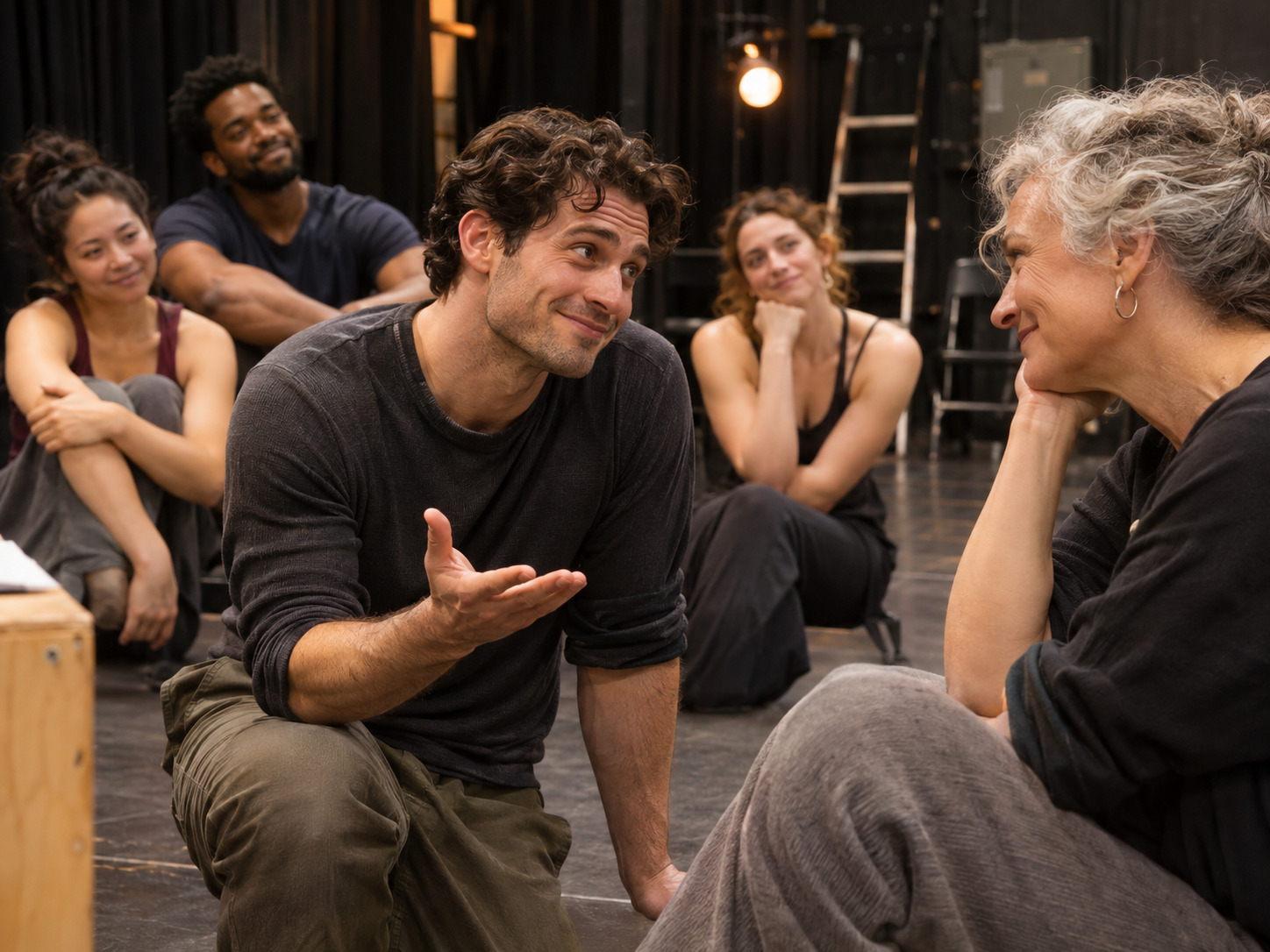
Sancho’s timing should respond to what he receives. The accompaniment remains fixed, but the exchange can stay alive.
Keep the staging close and readable
Start with the simplest physical arrangement the scene allows.
Decide:
- where Sancho begins,
- where the listener’s focus is,
- whether eye contact is available immediately,
- what distance makes the attempt feel personal,
- and whether any movement helps the next musical entrance.
Avoid wandering during a delicate scene. Movement should either test the connection, offer help, change the listener’s focus, or prepare the transition.
Try one run with no planned movement. Add back only the actions that make the relationship clearer or help the performer hear the track.
A small adjustment—a chair angle, a shared object already authorized by the production, or a deliberate change of focus—can carry more weight than a broad comic gesture.
Rehearse the emotional handoff into the finale
The album lists “A Little Gossip” immediately before “Finale (The Impossible Dream).” Even when a production’s licensed staging or materials shape the transition differently, the number should not end as an isolated applause button.
Run the final phrase into the exact next event. Confirm:
- who owns the final focus,
- whether the last musical sound resolves or leaves tension,
- what the listener does after Sancho finishes,
- who gives the next playback or stage cue,
- and how long the company remains in the same emotional world.
Do not erase the tenderness by holding for a response that the scene does not want. Do not rush the next cue because the number is quiet.
The transition is part of the rehearsal. The final effect should be that Sancho has kept something alive in the room, even if he cannot solve what is happening.
Know when the standard track needs a real change
Many problems belong to cueing, intention, diction, or stage focus. Some belong to the file.
Document the exact mismatch when:
- the approved key prevents clear conversational phrasing,
- the tempo blocks a necessary licensed stage action,
- a cut removes the tactic change that makes the scene understandable,
- the introduction does not support the planned entrance,
- a pause or cue must align with a specific production event,
- or the ending needs a different approved handoff.
The Broadwaytrax product page provides a customization route for key, tempo, and cut requests. Name the current file, exact landmark, stage action, and desired result.
Any change to protected show material should be confirmed with the appropriate rights holder. Broadwaytrax’s theater license covers use of its sound recording; grand rights for the theatrical performance remain separate.
A focused 20-minute rehearsal
Minutes 1–4: listen and mark
Follow the complete track. Mark the introduction, entrance, texture changes, restart point, final phrase, and transition.
Minutes 5–8: speak to one listener
Complete the objective sentence and speak the text without music. Keep the humor inside the relationship.
Minutes 9–13: map the tactics
Assign a playable verb to each section. Sing at a comfortable volume and make every change of tactic audible.
Minutes 14–17: add the listener and staging
Give the scene partner an active score. Keep movement minimal and cue-driven.
Minutes 18–20: prove the ending
Run the final section into the exact next event. Check the last focus, playback cue, and emotional continuity.
FAQ: rehearsing “A Little Gossip”
Is the Broadwaytrax track accompaniment only?
Yes. The current product page identifies it as fully orchestrated accompaniment, and the Man of La Mancha album states that its 15 tracks are accompaniment-only versions with no lead vocals.
How do we keep the number funny without breaking the scene?
Give the humor a specific recipient and objective. Let each light turn be Sancho’s next attempt to help, not a signal that the emotional situation has stopped mattering.
What should the performer practice first?
Start with the complete track map and the relationship. Mark the entrance, major accompaniment changes, pauses, ending, and transition before adding stage business.
How can the actor listen when the accompaniment cannot wait?
Keep the pulse active during every pause. Decide what Sancho expected, what he received, and what tactic follows. The reaction can change while the musical timing stays dependable.
Can the track be changed for our production?
The current product page provides a route for key, tempo, and cut requests. Identify the exact mismatch and confirm that any change is permitted by the relevant rights holder.
What permissions are needed for performance?
The product and album pages distinguish personal practice or recital use from theater use. They state that a theater license covers the Broadwaytrax sound recording, while grand rights from the publisher are required for theatrical performances.
Rehearse the number with Broadwaytrax’s fully orchestrated accompaniment track and map every comic turn, pause, and final transition.
Rehearse “A Little Gossip”The takeaway
“A Little Gossip” works when the performer uses humor to stay connected, not to escape the scene. Give Sancho one person to help, map the accompaniment, build the lightness from changing tactics, and rehearse the ending into the next emotional event. The number can offer relief while keeping the truth of the room fully present.